Is Your Workforce Ready for the Future?
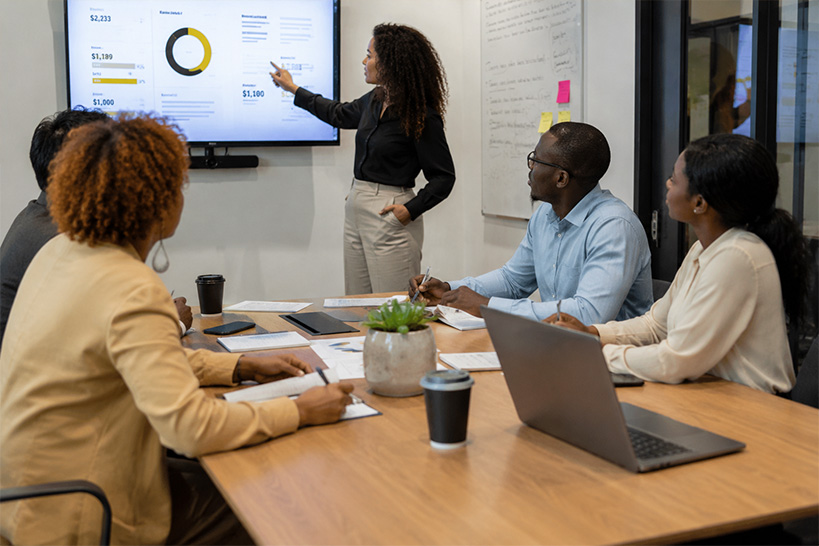
Your organization may have talented employees, but do they have the skills your organization will need tomorrow?
It’s a question most leaders never stop to ask. You know your headcount. You know your job titles. But do you actually know what your team can do, and what it can’t?
The Workforce Problem
Most organizations can tell you exactly how many people they employ. Far fewer can tell you what skills those people actually have.
A nonprofit might know it has three program coordinators, but not whether any of them can manage a database, analyze outcomes data, or run a virtual training session. A small business might know its sales team hit their numbers last quarter, but have no idea whether that team is ready to sell in a market shaped by AI tools and changing customer expectations.
Job titles describe a role. They don’t describe a capability. And that gap is where organizations quietly fall behind.
Why Skills Matter More Than Job Titles
Having people on staff is not the same as having the right skills on staff.
Technology is changing faster than most job descriptions can keep up with. Customers expect faster, more personalized service. Tasks that used to take a specialist can now be done with the right training and the right tools. The organizations that thrive are not necessarily the ones with the most employees. They are the ones whose employees can adapt.
Identify Your Is Your Workforce Ready for the Future?
You don’t need a complicated system to start. Ask your team these questions:
- What skills do we already have?
- Where are the obvious gaps?
- Which employees are ready to grow into new responsibilities, with the right support?
- What skills will we need in the next one to three years, not just today?
Answering these honestly is the first real step toward a workforce that can handle what’s coming, instead of only what’s already here.
Build Your Workforce, Don’t Just Replace It
When a skill gap shows up, hiring isn’t always the answer. Often, the people you need are already on your team.
Training, upskilling, mentorship, and hands-on technology and AI instruction can turn a good employee into exactly the person your organization needs next. This approach costs less than constant turnover, and it builds loyalty that new hires simply don’t bring with them on day one.
Is Your Workforce Ready?
Here’s the uncomfortable truth: most organizations don’t discover their skill gaps until those gaps become a real problem, a missed opportunity, a project no one could deliver, a client who went elsewhere.
Don’t wait for that moment.
This is where Atanga SkillBridge Group LLC comes in. We help nonprofits, small businesses, and mission-driven organizations strengthen their workforce through practical training in workforce development, technology, and AI skills, building teams that are genuinely job-ready, not just present.
Your workforce is one of your organization’s greatest assets, but only when its skills match your mission. Don’t wait for a skill gap to become a business problem. Start building the workforce your organization needs for the future.
Book a free consultation with Atanga SkillBridge Group LLC to assess your workforce needs and explore practical training solutions.

Keep reading
More insights for your business.
 AI Skills in 2026: What Workers and Small Businesses Need to Learn Now
Nearly every employee has touched an AI tool by now. Far fewer feel ready to use one well. Recent research backs this up directly:…
AI Skills in 2026: What Workers and Small Businesses Need to Learn Now
Nearly every employee has touched an AI tool by now. Far fewer feel ready to use one well. Recent research backs this up directly:…
 How to Build a Skills-Based Onboarding Program for a Stronger Workforce
Hiring the right person is only the beginning. If you want employees to perform well, you need to give them the right skills to…
What Is Organizational Readiness? How Skills Intelligence Powers Modern Workforce Development
What Is Organizational Readiness? How Skills Intelligence Powers Modern Workforce Development A department head looks at her org chart and sees job titles, tenure,…
How to Build a Skills-Based Onboarding Program for a Stronger Workforce
Hiring the right person is only the beginning. If you want employees to perform well, you need to give them the right skills to…
What Is Organizational Readiness? How Skills Intelligence Powers Modern Workforce Development
What Is Organizational Readiness? How Skills Intelligence Powers Modern Workforce Development A department head looks at her org chart and sees job titles, tenure,…
Ready to build a stronger, grant-ready organization?
Book a free consultation and leave with a clear next step, whether we work together or not.